
The Science in 30 Seconds
Light — specifically visible light in the 380–780nm range — is the single greatest factor in cannabinoid degradation. A landmark University of London study found that UV radiation degrades THC at approximately 16.6% per year under typical conditions. More recent testing shows that in clear containers exposed to retail lighting, THC can degrade 10–20% in just three months.
UV glass flips this. It blocks 99%+ of visible light while the deep violet-black tint makes the jar functionally opaque. The cannabis inside stays at the potency it tested at — for months, not weeks. That's the science. Now here's why it matters for your business.
Reason 1: Automatic Opacity Compliance
Twelve of the 13 adult-use markets we serve require opaque packaging — Michigan, Ohio, Illinois, Missouri, Minnesota, California, Colorado, Nevada, New York, New Jersey, Massachusetts, and Maryland. UV glass meets this requirement automatically. The deep violet-black tint makes contents invisible from the outside without needing secondary packaging, opaque sleeves, or colored labels to cover a clear container.
This matters operationally. Operators using clear glass in opaque-required states need a second step — a shrink sleeve, an outer box, or a colored label that wraps the entire jar. Each adds cost, labor, and a potential compliance failure point. UV glass eliminates that second step entirely. One material, one container, compliant on contact.
The Compliance Math
Clear glass jar ($0.50–$0.70/unit) + opaque shrink sleeve ($0.15–$0.25/unit) + application labor = $0.70–$1.00+ per finished unit. UV glass jar ($1.08–$1.23/unit) = compliant out of the box. The effective premium for UV glass, once you factor in secondary packaging costs, is often less than $0.20/unit — and you get a dramatically better product.
Reason 2: Potency Protection Is a Business Problem
This isn't just about "keeping weed fresh." It's about what happens when your product tests at 28% THC in the lab and hits 23% by the time a customer opens it. In competitive markets, that gap erodes trust, drives returns, and kills repeat purchases.
Cannabis sits in dispensary display cases under retail lighting for days or weeks. Even LED lighting — better than fluorescent, but not harmless — emits enough visible light spectrum to trigger degradation. A pre-roll jar that tested perfectly on day one loses measurable potency on the shelf in a clear container.
UV glass keeps the tested potency closer to the experienced potency. For operators who invest in premium cultivation and lab-tested product, packaging that preserves what you paid to create is not an upsell — it's protection of your existing investment.
Reason 3: The Budtender Talking Point
We covered this in depth in our budtender perspective piece, but it bears repeating here because UV glass is the single strongest example.
When a budtender picks up a UV glass jar and tells a customer "this glass protects the terpenes from light degradation — that's why it smells and tastes better than what's in a clear jar," that sentence moves product. It's specific. It's credible. It justifies a higher price point. And it gives the budtender something to say beyond "it tested high."
No other packaging material creates its own sales narrative. Glass tubes signal premium. Colored PET reads professional. But UV glass is the only material where the budtender can explain why it's better and have the science back them up. That talking point converts browsers into buyers at the point of sale.
Want to Price UV Glass for Your Line?
We carry 100ml through 500ml UV glass jars at factory-direct pricing. Tell us your volume and we'll send a quote with shipping included.
Get UV Glass PricingReason 4: Plain Packaging Advantage
In Missouri, Massachusetts, Maryland, and New York, branding is restricted to plain text — no logos, no graphics, no images. Every label on the shelf looks functionally identical. In this environment, the only way to communicate "premium" is through the packaging material itself.
UV glass on a Missouri dispensary shelf, surrounded by plastic containers with identical plain-text labels, is the most visually distinctive product in the case. The deep violet-black jar stands out against a wall of white, black, and clear containers. No label required — the glass does the differentiation.
This is why our UV glass adoption is highest in plain packaging states. Operators in these markets recognized early that when you can't brand with graphics, you brand with materials. UV glass is the highest-signal material available.
Reason 5: The Actual Cost Math
The objection we hear most: "UV glass is too expensive." Let's run the numbers.
| UV Glass Size | 250K Price | 1M Price | Best For |
|---|---|---|---|
| 100ml | $1.23 | $1.08 | Eighths, small flower |
| 200ml | $2.23 | $1.77 | Quarter oz, concentrates |
| 250ml | $2.85 | $2.54 | Half oz flower |
| 300ml | $3.23 | $2.31 | Full oz, premium flower |
| 500ml | $3.46 | $3.23 | Bulk flower, multi-strain |
All prices factory-direct from HIGHER Packaging. Shipping included in all quotes. CR-compatible closures available for all sizes.
The Full UV Glass Lineup
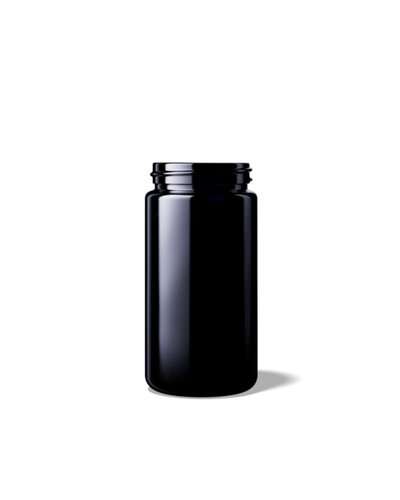
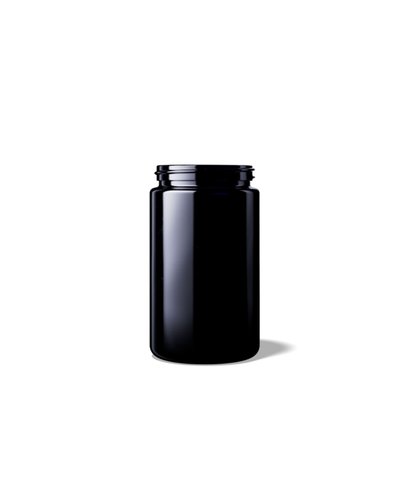
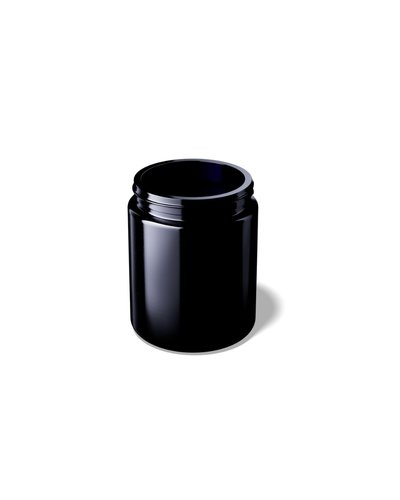
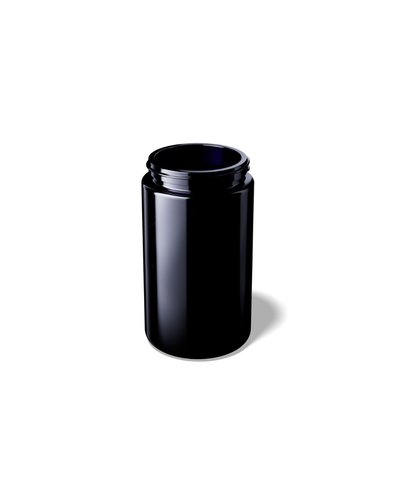
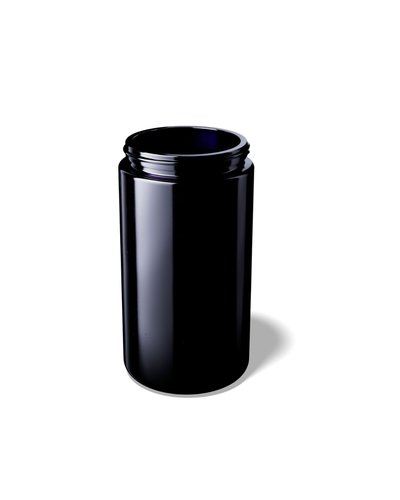
The Margin Math at Retail
Take the most common use case: premium flower eighths in the 100ml jar.
Packaging cost: $1.08–$1.23 per unit at volume. Retail price of a premium eighth: $35–$55 in most markets. That means UV glass packaging represents roughly 2–3.5% of the retail price. If UV glass helps you command even a $5 premium over the same product in a plastic jar — and it does, based on what dispensary operators tell us — that's a 4–5x return on the packaging investment.
For context: operators routinely spend $2–4 on custom printed mylar bags that offer zero shelf life protection, no compliance benefit, and no budtender talking point. UV glass costs the same or less and does all three.
Who Should Switch — And Who Shouldn't
UV glass makes sense for operators who:
Sell premium flower or concentrates — products where terpene preservation and perceived quality directly affect pricing and repeat purchases.
Operate in plain packaging states — Missouri, Massachusetts, Maryland, New York — where material quality is the only brand signal available.
Compete on quality, not price — if your differentiator is "this is the best product in the case," your packaging needs to match that claim.
Have products sitting on shelves for 2+ weeks — the longer the retail dwell time, the more UV glass protects your investment.
UV glass may not make sense for:
Value-tier pre-rolls or high-volume, low-margin SKUs — if you're competing at $3–5 per pre-roll, a $1+ jar doesn't pencil. Use CR tubes or pop-tops instead.
Products with very fast sell-through — if your product consistently sells within days of hitting the shelf, the preservation benefit is minimal (though the positioning benefit still applies).
Operators focused purely on cost optimization — if your strategy is lowest-possible COGS, PET CR tubes at $0.14–$0.19/unit are the right answer.
Making the Switch
Operators who move to UV glass typically start with their top 1–3 SKUs — the premium flower or concentrate lines where the positioning benefit is strongest. They keep their value-tier products in PET or standard glass and let the UV glass create a visible "good/better/best" tiering on the dispensary shelf.
This approach lets you test the sell-through impact without committing your entire packaging budget. Most operators who start with a test SKU expand to full UV glass within two ordering cycles because the numbers work.
Frequently Asked Questions
How much THC degrades in clear glass cannabis packaging?
+Research shows UV light degrades THC at approximately 16.6% per year under typical light exposure. In clear containers under retail lighting, THC can degrade 10–20% in just three months. UV glass blocks 99%+ of visible light, virtually eliminating light-driven degradation.
Is UV glass worth the extra cost for cannabis packaging?
+For premium products, yes. At $1.08–$1.23/unit for 100ml jars, UV glass represents 2–3.5% of a typical premium eighth's retail price. If it enables even a $5 shelf premium — and operators consistently report it does — that's a 4–5x return on the packaging investment. Factor in the eliminated cost of secondary opaque packaging and the math gets even better.
Does UV glass meet state opacity requirements?
+Yes. UV glass automatically meets opacity requirements in 12 of the 13 adult-use markets we serve. The deep violet-black tint makes contents not visible from outside, satisfying opaque packaging regulations without secondary packaging, sleeves, or wraps.
What sizes do wholesale UV glass jars come in?
+We offer UV glass jars in five sizes: 100ml (eighths), 200ml (quarters/concentrates), 250ml (half oz), 300ml (full oz), and 500ml (bulk/multi-strain). Factory-direct pricing ranges from $1.08/unit at 1M volume for 100ml to $3.23/unit for 500ml. Shipping included on all quotes.
How long does cannabis stay fresh in UV glass?
+Cannabis stored in UV glass with proper humidity control (55–65% RH) maintains potency and terpene profiles for 6–12 months. In standard clear glass under typical retail lighting, noticeable degradation begins within weeks. The difference is most pronounced in terpene preservation — the compounds responsible for aroma and flavor.


